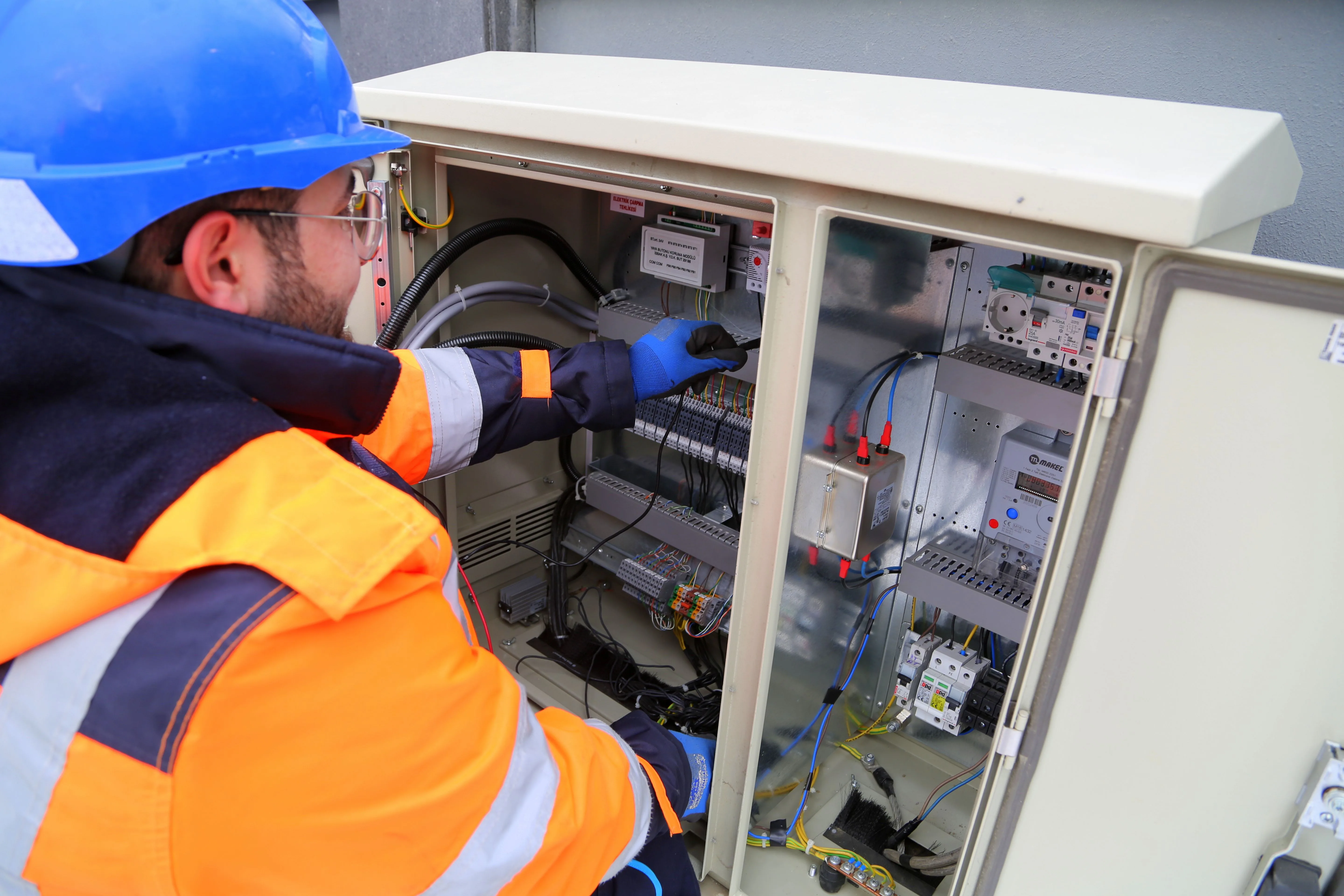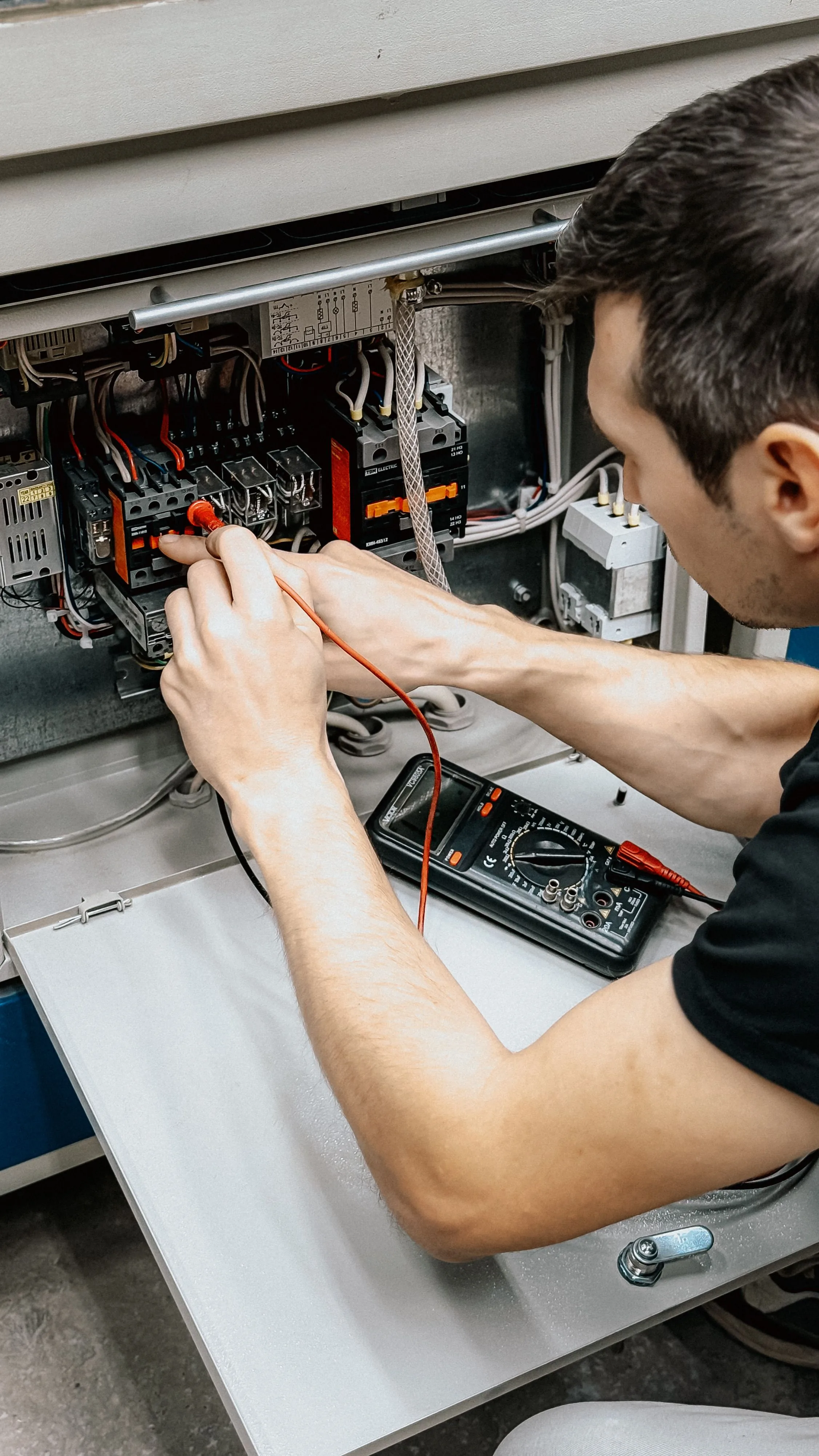

Electrical troubleshooting is not parts replacement with optimism. It is the job of taking a symptom — a breaker that keeps tripping, an outlet that went dead, lights that dim when the HVAC starts, half the house out after a storm — and tracing it back to the fault that is actually causing it.
That distinction matters because the symptom is often not where the failure is. A dead outlet may be upstream of a tripped GFCI nobody realized fed it. Lights flickering across the whole property can point at a failing neutral at the service. A breaker that trips after a new appliance is added may be protecting you from an overloaded circuit, not asking for a larger breaker.
We take fault-finding and repair calls across Nashville and the surrounding Middle Tennessee communities — Hendersonville, Gallatin, White House, Goodlettsville, Brentwood, Franklin, Mt. Juliet, Bellevue, Belle Meade, Forest Hills and Oak Hill. The point is proving the cause before anything is declared fixed.
What this page is for
Whether your situation is a live fault to find and repair, or a documented condition report instead.
If you have a live fault that needs to be found and repaired, this is the right page.
If you need a documented condition report instead, start with an electrical safety inspection.
Symptoms we are called out to most often
Tripping breakers, dead outlets and partial power loss, flicker, storm and wet-weather faults, heat and burning smells.
Breakers that keep tripping
Repeated tripping is not a nuisance to be managed by resetting. It is a protective device doing exactly what it exists to do. The causes are usually one of four things: overload, short circuit, ground fault, or a breaker that has weakened and now trips below its rating.
The useful diagnostic questions are specific. Does it trip only when one piece of equipment runs? Does it trip at random times? Did it start after a new appliance, heater, freezer, window unit, or charger was added? Does it trip immediately after reset, or only after a few minutes under load? Those patterns change what we test first.
Sometimes the answer is repair. Sometimes the real answer is that the circuit is being asked to do more than it was built for, in which case the right next step is a dedicated circuit or, in larger cases, a panel upgrade.
Dead outlets, dead circuits, and partial power loss
A dead outlet is not always an outlet failure. It may be a tripped GFCI in a bathroom, garage, exterior box, or utility space that feeds several receptacles downstream. It may be a failed back-wired connection. It may be a loose splice in a junction box you did not know existed. It may be a breaker connection at the panel. The point of troubleshooting is not guessing which one sounds most common; it is narrowing the fault until only one explanation remains.
Partial power loss matters because it often tells us where to look. One dead room suggests a circuit problem. Half the house out, or 120-volt loads behaving strangely while 240-volt equipment drops out, often points closer to the service or panel. That changes the urgency and the repair path.
Flickering or dimming lights
Not all flicker means the same thing. One loose lamp, one failing fixture, or one dimmer that has never liked the bulbs attached to it is a local problem. Flicker across several rooms when a large load starts can mean voltage drop, capacity strain, or a poor connection upstream. Lights brightening and dimming together across the property can indicate a failing neutral, which is not a watch-and-wait issue.
That is why we care about the exact pattern: one fixture or many, one circuit or several, only when equipment starts or at random, only in wet weather or all the time.
Faults after storms, surges, or wet weather
A fault that begins after a storm is already half-described. Outdoor fittings, weather-exposed connections, detached-structure feeds, surge-damaged breakers, and service-side issues all become more likely once weather is part of the story.
We have handled calls where the immediate symptom was loss of power after a surge, and where the real problem turned out to be at the main breaker or service equipment rather than at the receptacle the customer first noticed. Outdoor and garage circuits that fail when it rains are similar: the visible symptom is inconsistent operation, but the underlying cause is often water finding a path into a damaged fitting, box, or cable.
Warm devices, buzzing, discoloration, and burning smells
These are the symptoms we treat as same-day calls, and they are not “see how it does” situations. They are warning signs that heat is being generated where it should not be.
When to call the same day
Smells, warm devices, buzzing, scorching, whole-property flicker, and post-storm power loss — the list that should not wait.
Call the same day if you have any of the following: - a burning or fishy smell near outlets, switches, or the panel - a panel, breaker, switch, or receptacle that is warm to the touch - buzzing, crackling, or visible scorching - a breaker that trips immediately every time it is reset - lights across the property brightening and dimming together - partial power loss after a storm or surge
Those are not all identical problems, but they share one thing: they can be the early stage of a fire or a service failure, and they are worth diagnosing now rather than after they move from symptom to damage.
What we check first during troubleshooting
Your account of the pattern first, then panel-outward isolation — and how certain the diagnosis actually is.
We start with your account of the pattern because it usually contains the first useful lead. When did it begin? What else is running when it happens? Is it getting worse? Did it start after weather, renovation work, a new appliance, or someone else doing electrical work? A fault that started after a specific change is rarely unrelated to that change.
Then we work from the panel outward. We isolate the affected circuit, check loading, verify voltage under real conditions, and narrow the problem to a section and then to a point on it. Intermittent faults are the ones most often misdiagnosed, so we deliberately recreate the conditions that produce them where that can be done safely. A fault that will not appear cannot honestly be claimed fixed.
We also tell you how certain the diagnosis is. Where the fault is proven, we say so. Where the evidence points strongly one way but the final confirmation requires opening more of the system, we say that too. Presenting a guess as a diagnosis is how people pay for the wrong repair.
What the visit often turns into
First-visit repairs, and the cases where the symptom turns out to be part of a larger condition.
Many troubleshooting calls are repaired on the first visit. Just as many reveal that the visible symptom is part of a larger condition.
Examples: - a tripping breaker turns out to be a circuit that now needs its own load path, which becomes a dedicated circuit - repeated faults in different parts of the property point at aging or damaged branch wiring, which becomes a wiring or rewiring conversation - flicker, heat, lost legs, or lack of capacity point back to the service or panel, which becomes panel-upgrade scope
What we do not do is sell a small repair that we already know will not hold. If the symptom is only the visible end of a larger issue, we say so plainly.
Why Power Line Electrical Contractors
Licensed, bonded and insured diagnosis done on site — including the calls that end with no work needed.
Fault-finding is where the difference between a licensed electrician and a handyman is starkest, because a wrong diagnosis here does not merely fail to fix the problem — it leaves a hazard in place while everyone believes it has been dealt with.
You get a licensed, bonded and insured contractor with 25+ years of experience working under Tennessee Electrical Contractor #82227, on site doing the diagnosis himself. We are available 5:00 AM to 7:00 PM, seven days a week, and emergency and same-day service is available for genuinely urgent faults. Estimates are free.
A note on honesty: not every call ends with work. Sometimes the answer is that a GFCI needed resetting, an appliance is at fault rather than the circuit, or what you are seeing is normal. We will tell you that and you will not be talked into a repair you do not need.
If you need a fault found and fixed, this is the right starting point. If you want a documented overview of the system instead, that is an electrical safety inspection. Otherwise, call or write and describe the symptom, or look at everything we do.
Electrical Troubleshooting and Repair FAQs
Why does my breaker keep tripping?Why repeated tripping is the protective device working, and what the pattern points at.
Repeated tripping is a protective device doing exactly what it's designed to do — usually an overload, a short, or a ground fault. We test from the panel outward to find the actual cause rather than just resetting it.
Is a flickering light an electrical emergency?Why one fixture flickering and the whole property flickering are different calls.
It depends. Flickering from a loose connection in one fixture is different from flickering across the whole property, which can indicate a failing neutral and is a same-day call.
Does Power Line Electrical Contractors offer emergency electrical repair in Middle Tennessee?Same-day availability for genuinely urgent faults, alongside our regular hours.
Yes. Emergency and same-day service is available for genuinely urgent faults — burning smells, warm panels, buzzing, or scorch marks — alongside our regular 5:00 AM to 7:00 PM, seven-day hours.
What is the difference between troubleshooting and an electrical safety inspection?Which visit fits: a live problem to find, or a planned decision to document.
Troubleshooting is for a live problem; an inspection is for a planned decision. A breaker that keeps tripping, power that went out, flickering, a burning smell, or something that has plainly stopped working is fault-finding. Buying, selling, renovating, documenting condition, or checking what the system can support before you add load is an inspection. Tell us the symptom or the decision you're making and we'll route you to the right visit.