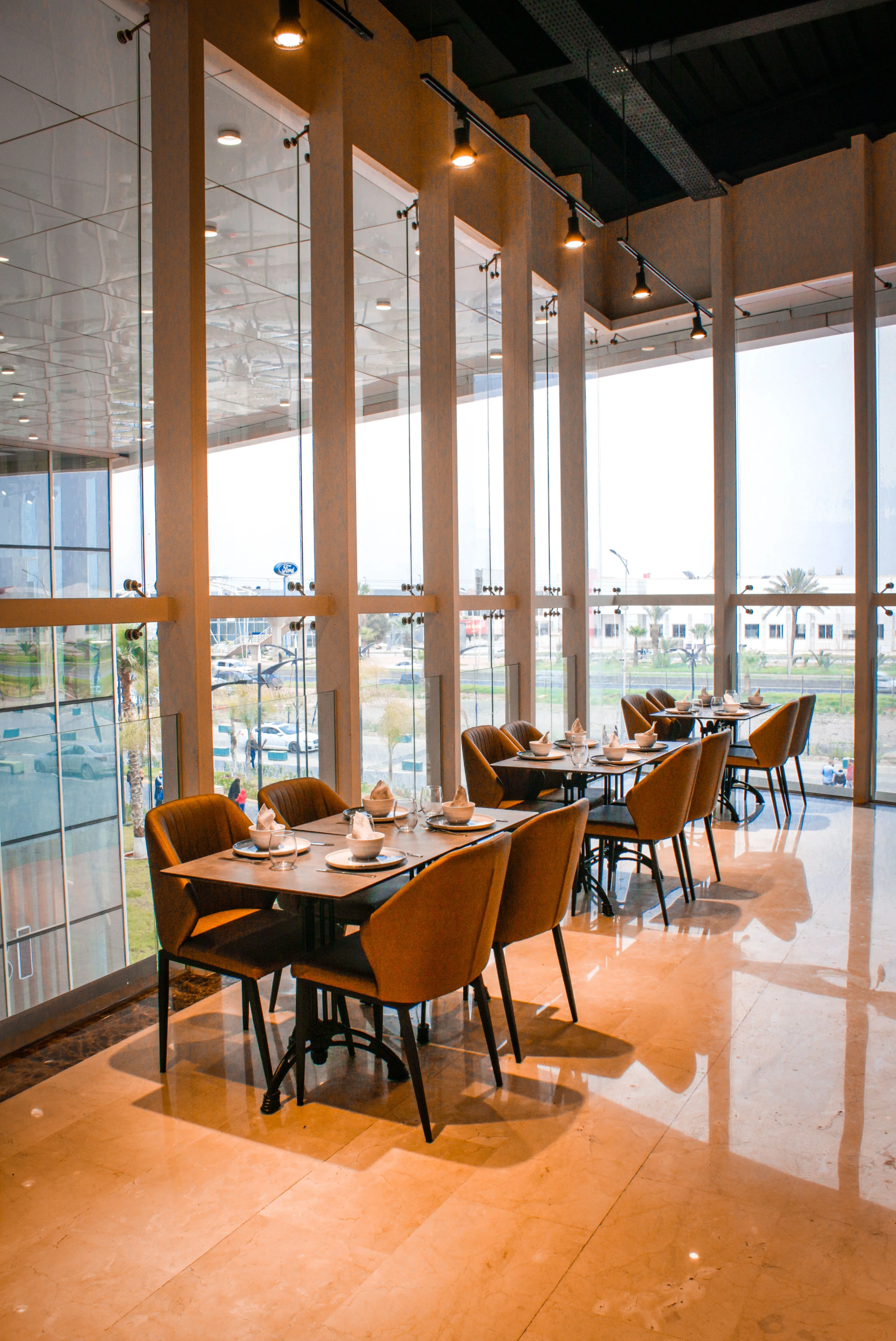

Commercial electrical work is a different job from residential work, and mostly for one reason: the building has to keep earning while you are in it. A retail unit cannot lose its point-of-sale terminals on a Saturday, an office cannot lose its server closet, and a restaurant cannot lose refrigeration at any hour at all. Scheduling and sequencing matter as much as the wiring.
We work in retail spaces, offices, restaurants and other commercial premises, and the restaurant example above is not hypothetical — kitchens combine heavy equipment loads, heat, moisture and a service window that cannot move, which is about as demanding a set of constraints as commercial electrical work gets.
We do commercial electrical work across Nashville and the surrounding Middle Tennessee communities — Hendersonville, Gallatin, Goodlettsville, White House, Brentwood, Franklin, Mt. Juliet, Bellevue, Belle Meade, Forest Hills and Oak Hill. This is how our previous site described the work, and it still holds:
Quoted word-for-word from our previous website.Businesses require dependable electrical systems to support their daily operations, ensure employee safety, and create a welcoming environment for customers. Power Line Electrical Contractors offers a full range of commercial electrical services designed to meet the diverse needs of retail spaces, offices, restaurants, and other commercial establishments. We provide efficient, code-compliant solutions that minimize disruption and support your business growth.
The commercial work we take on
Fit-outs, equipment hook-ups, capacity upgrades, lighting and cabling — and the building types we send elsewhere.
- Tenant improvements and fit-outs — the electrical side of turning a shell or a previous tenant’s layout into the space your business actually needs: power where the equipment is going, lighting for how the space will be used, and circuits sized for what you are installing rather than what was there.
- Equipment connections and hook-ups, from kitchen equipment and compressors to shop machinery and specialist gear, wired to the nameplate requirement and disconnected properly for service.
- Service and capacity upgrades when the existing supply cannot carry what the business has become. This is frequently the real answer behind “we keep tripping things”.
- Commercial lighting, including LED retrofits, failed ballasts, exterior and parking-area lighting, and relighting a space that was laid out for a different tenant. The detail is on our lighting installation page.
- Structured cabling for network, phone and data — see smart home, low voltage and network cabling.
- Troubleshooting and repairs without shutting the business down, which usually means isolating a circuit at a time rather than the building.
- Scheduled checks and repairs for landlords and managers who would rather find the loose connection than the failure.
Two kinds of building sit outside that list because they work differently. If yours is a production or plant environment, the relevant page is industrial electrical. If it is a clinic or medical office, where the constraint is the patient schedule rather than trading hours, see healthcare facility electrical.
Signs your building needs attention
The patterns a building shows once it has been adapted past its original electrical layout.
- Breakers tripping under normal trading conditions, or a panel that runs warm to the touch.
- You have changed what the space does — added equipment, added staff, added hours — without changing the electrical service underneath it.
- Flickering or dimming when large equipment starts, particularly refrigeration or HVAC.
- A build-out or a new tenant where the existing power does not match the new layout.
- Failing lighting across a suite or a parking area, where replacing fittings one at a time has become its own maintenance budget.
- An inspection, an insurer or a landlord asking questions you cannot currently answer about the system.
- Extension leads doing permanent work. That is a circuit shortage with a temporary label on it.
None of those are emergencies on the day you notice them, which is exactly why they get deferred. The pattern we see most often in commercial buildings is a system that was correct for the original tenant and has been quietly adapted ever since — a circuit split here, a sub-fed panel there, a piece of equipment landed on whatever had capacity that week. Individually each decision was reasonable. Collectively they produce a building nobody fully understands, and the first person to find out what is really behind the wall is usually the one called out when it fails.
How we work in an occupied building
Trading hours first, then a proper survey, a scope and a number — with the smallest area isolated.
The first conversation is about your hours, not about the wiring. When you open, when you close, when the till is busiest, what can be off and for how long. Some of this work genuinely has to happen early morning or after hours, and our 5:00 AM to 7:00 PM availability seven days a week exists partly for that.
Then we survey properly: the service, the panel, what is actually on each circuit versus what the schedule claims, and the physical routes available above ceilings and through walls. You get a scope and a number before anything starts, and a call before either changes.
During the work we isolate the smallest area we can, keep the paths people walk clear, and clean as we go. Where a permit and inspection are required we handle the paperwork and meet the inspector. At the end you get a labeled panel and a walkthrough of what changed — which matters more in a commercial building than a house, because the person who calls next time may not be you.
Why Power Line Electrical Contractors
One licensed contractor on site, and an honest limit on the project size we take.
You are hiring a licensed contractor who will be on site doing the work, not a sales visit followed by whoever was available. That is a genuine limit as well as a benefit: we take commercial work at the scale one licensed contractor can do properly, and if your project is bigger than that we will say so rather than take it and stretch.
Work is performed under Tennessee Electrical Contractor #82227 by a licensed, bonded and insured contractor with 25+ years of experience. Emergency and same-day service is available. Estimates are free, and for larger capacity work you can ask about financing when we price it.
Our previous site closed this page with a line we are happy to stand behind:
Quoted word-for-word from our previous website.Choose Power Line Electrical Contractors for commercial electrical services that power your business with reliability and efficiency.
Request a commercial estimate or see every service we offer.
Commercial Electrical FAQs
Does Power Line Electrical Contractors work in occupied businesses without shutting them down?The smallest area isolated, walkways kept clear, and work scheduled around your trading hours.
Yes. We isolate the smallest area needed for the work, keep walkways clear, and schedule around your trading hours — including early morning or after-hours work where that fits the business better.
What commercial electrical work does PLEC handle in Middle Tennessee?Tenant improvements, equipment connections, capacity upgrades, lighting, cabling and troubleshooting.
Tenant improvements, equipment connections, service and capacity upgrades, commercial lighting, structured cabling, and troubleshooting for retail, office and restaurant spaces across Nashville and the surrounding communities.
Is Power Line Electrical Contractors licensed for commercial electrical work?License #82227 with CE Classification, general liability and workers' compensation in place.
Yes. PLEC holds Tennessee Electrical Contractor License #82227, CE Classification, and carries current general liability and workers' compensation insurance for commercial and residential work alike.