
A Level 2 charger is one of the largest continuous loads most homes ever add. It draws heavily, for hours, on a routine basis, and that is what makes it an electrical-planning job rather than a simple equipment install. The circuit has to be sized for continuous duty, the panel has to be able to carry it alongside everything else, and the finished installation has to make sense for where the vehicle actually parks.
This page is for charger installs where the first question is not “which unit do I buy” but “what can the service support, and what is the cleanest way to get power to the parking position?”
What this page is for
Which charger situations belong here, and when the job routes to a panel upgrade or a dedicated circuit instead.
This is the right page when you need a Level 2 charger circuit planned and installed properly.
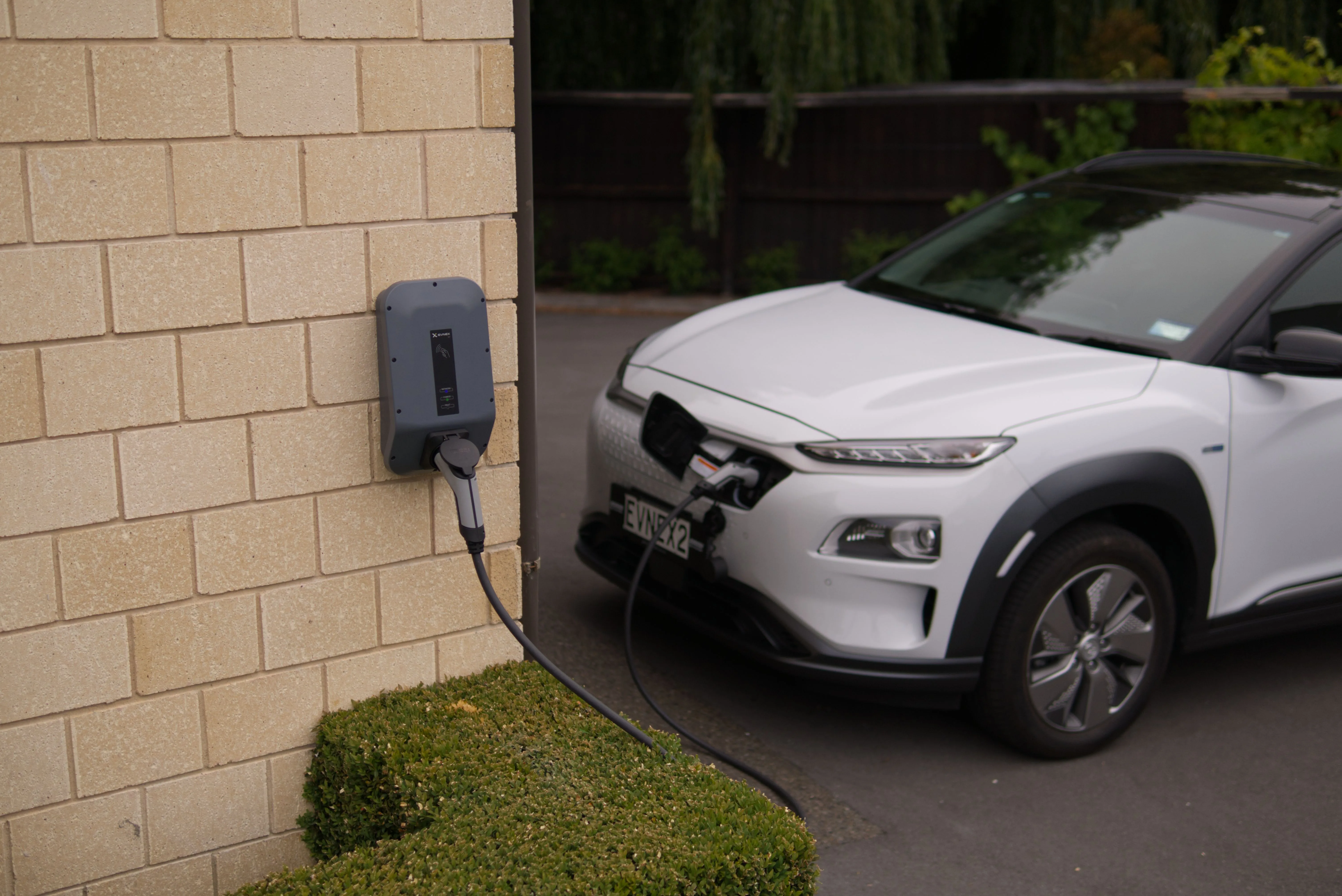
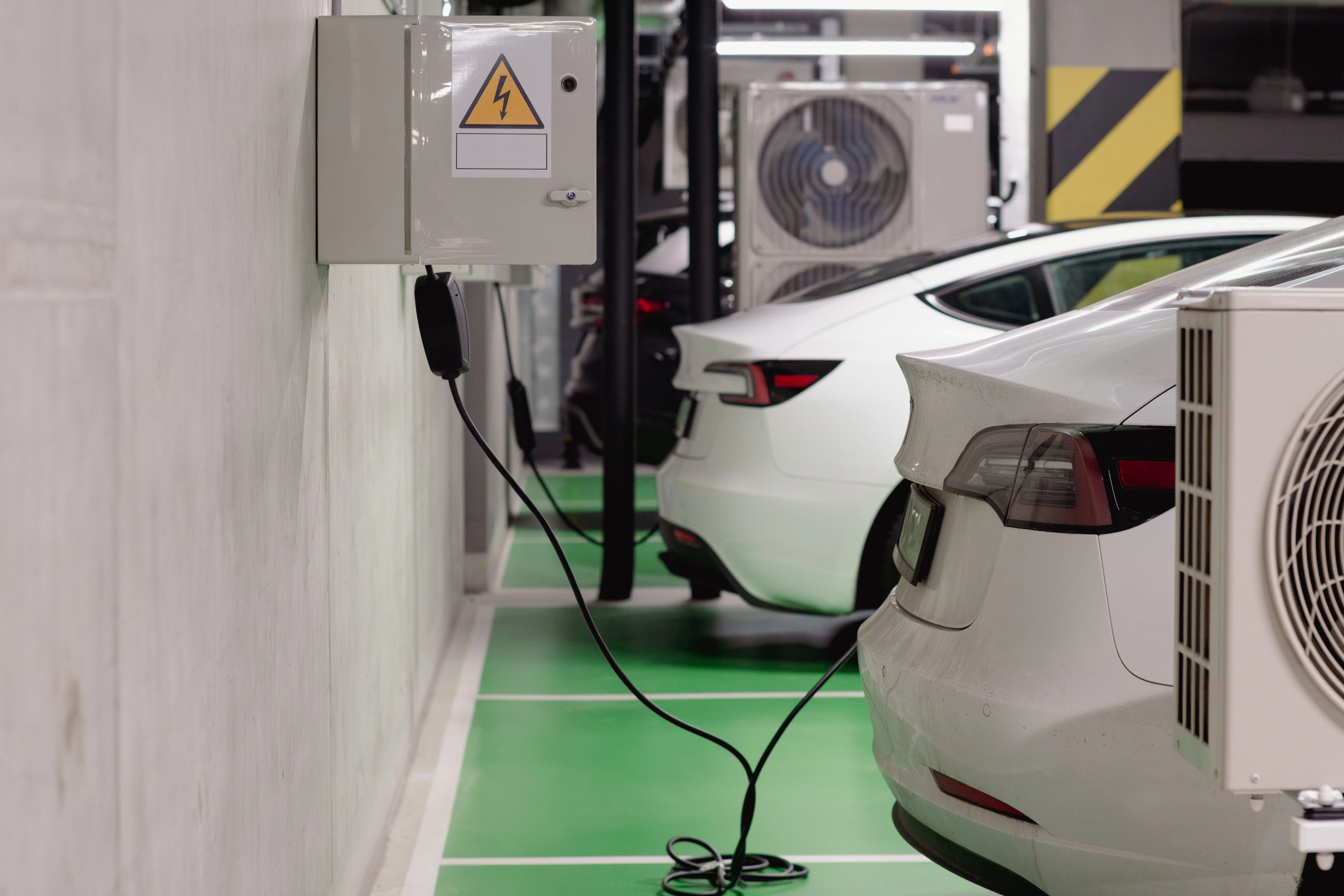
That usually includes situations like: - adding a first home charger and needing to know whether the current panel can support it - choosing between charger hardware options and wanting the electrical answer before ordering - installing a charger in a garage, on an exterior wall, or at a parking spot that is not close to the panel - placing a charger at a detached garage or other outbuilding - planning several charging positions for a business, staff area, or tenant-use property
If the service cannot carry the charger, that becomes a panel-upgrade conversation. If one load simply needs its own branch path and the charger is not the driver, that usually belongs on the dedicated-circuits page.
What Is a Level 2 EV Charger?
Why a 240-volt supply makes this an electrical project, and why the service decides the answer rather than the equipment.
A Level 2 EV charger is charging equipment supplied by a 240-volt circuit rather than an ordinary 120-volt receptacle, which is why it is an electrical project rather than something you take home and plug in. That supply is also why the panel comes first: the charger is a large load and holds it for hours at a stretch.
How quickly any particular vehicle charges depends on the vehicle, the equipment and the circuit feeding it, so this page publishes no charging speeds, power figures or driving ranges. What we can tell you is what your service will actually support, which decides whether the installation is straightforward or begins at the panel.
Do You Install the Tesla Wall Connector?
The Level 2 units we install, and why the supply work behind them is the same discipline whichever unit you choose.
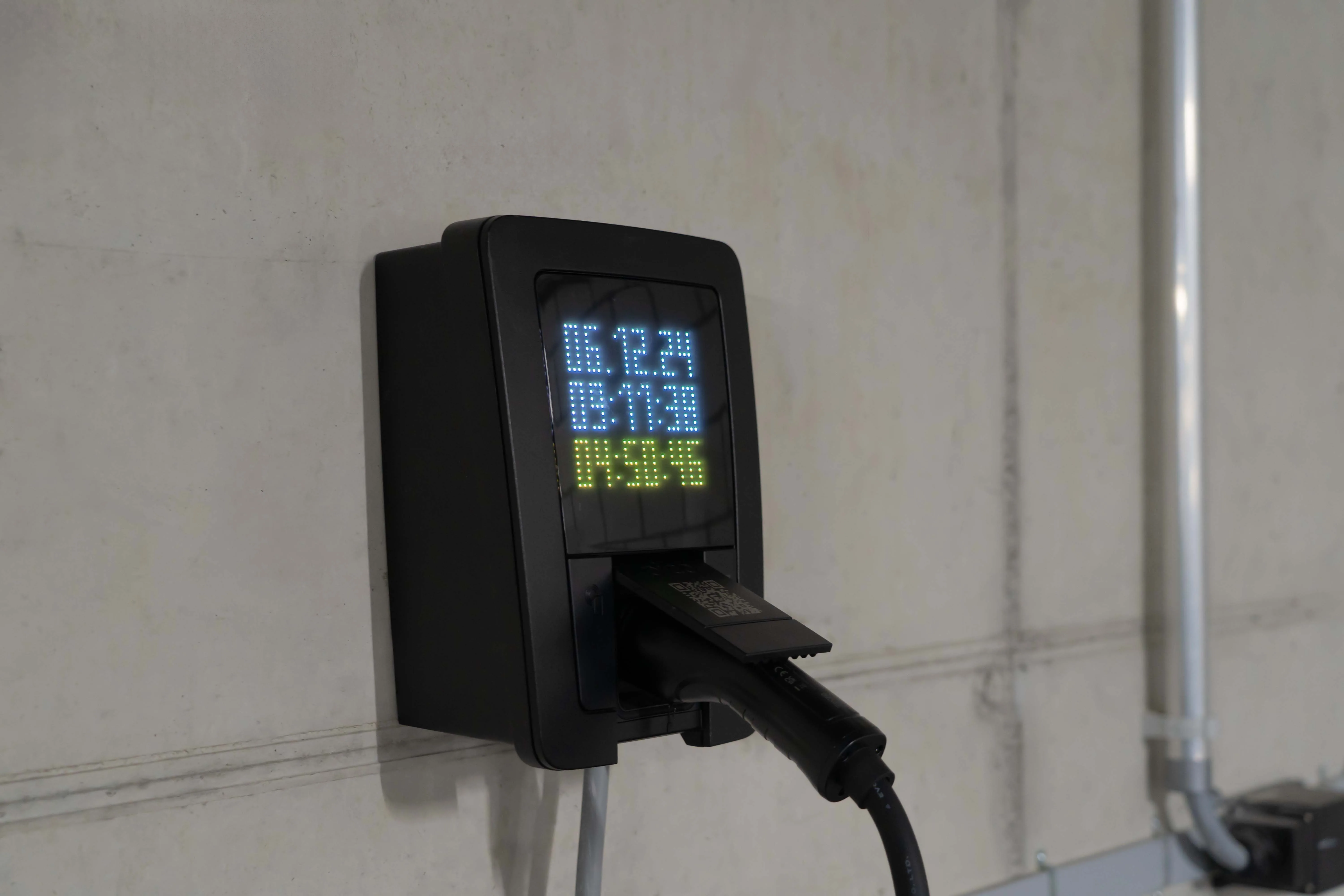
Yes. We install the Tesla Wall Connector and other Level 2 chargers, and the supply work behind them is the same discipline either way: a dedicated circuit sized for continuous duty, on a service that can carry it.
Naming the hardware is a statement about what we install, not a claim of manufacturer certification, approval or affiliation. Which unit suits which vehicle is a question for the manufacturer’s documentation, not for an electrician’s website. Our side is the supply — whether your panel can carry the charger you chose, and how the circuit reaches where the car actually parks.
What an EV charger installation involves
Capacity first, then the circuit, then the parking-side layout, then the outdoor and longer-route work that changes the scope.
A panel-first capacity assessment
We begin at the panel, not the parking space. A load calculation on the existing service tells you one of three true things: the service supports the charger as planned, it supports the charger at a reduced amperage, or it needs upgrading first.
That answer is what matters before equipment decisions, cable routing, or mount height. The wrong sequence is to buy hardware first and discover later that the service cannot support it the way you expected.
A dedicated circuit sized for continuous duty
An EV charger is not sized like a casual plug load. The breaker, conductor, terminations, and route all have to be selected for continuous duty and for the actual charger rating, not for the smallest combination that will energize it.
That is why charger work overlaps with dedicated-circuit planning but usually carries more capacity scrutiny than a typical single-load circuit.
The physical installation people actually live with
Where the vehicle parks matters. Which side the charge port is on matters. How the cable crosses the garage or driveway matters. A charger that technically works but leaves the cable stretched across a walkway is not a good installation.
Small layout choices determine whether the finished setup is straightforward to use every night or mildly annoying every single day.
Outdoor, detached-garage, and longer-route work
A charger on an outside wall, at a detached garage, or across a longer route is still charger work, but the job changes. Distance, finished-wall constraints, exposure, and feeder questions all change the scope.
That is the kind of installation that benefits from being scoped early rather than assumed to be “just another outlet.”
Smart load management and when it matters
When unused headroom at one moment is the limit, and why that option is judged at the panel rather than from a product page.
Some charger installations are not blocked by the idea of EV charging itself, but by how much unused headroom the service has at one moment. Smart load-management setups can change that conversation in the right configuration by letting the charger respond to what the home is already drawing.
Whether that option fits a specific property depends on the service, the panel, and the rest of the building’s load profile. It is not something to assume from a product page. It is something to evaluate at the panel with the real installation in front of us.
Signs to talk to us before buying hardware
Situations where the supply answer should come before the hardware order — including a charger that already trips or runs warm.
- You have ordered the vehicle but have not checked the panel yet.
- The panel is already full or older equipment is already being questioned.
- You want the charger far from the panel, outside, or at a detached garage.
- You are deciding between charger options and want to know what the supply will actually support first.
- A charger already installed elsewhere trips, runs warm, or does not appear to match the circuit serving it.
- You manage a business or property and are evaluating how many charging positions the current service can truly support.
How we approach the job
From the capacity answer through layout and route to testing under load, labeling the circuit, and the permit and inspection we arrange.
We start with the capacity answer, because that answer governs everything else. If the service can support the charger as planned, we move on to the physical layout. If it supports the load only at a reduced setting, we say that plainly. If the service needs to change first, you hear that before the work is priced as though it were a straightforward charger install.
Then we plan the installation around how the space is used: where the vehicle parks, how the cable should reach it, and what route gets the circuit there with the least disruption and the best long-term result.
We install, terminate, test under load, label the circuit in the panel, and arrange permit and inspection with the local building department.
For businesses and multi-position layouts, the same rule applies with bigger numbers attached: it is better to build from a real capacity plan than to choose an attractive number of charging positions first and try to squeeze them onto the service afterwards.
A word on incentives and hardware choices
Why no program figures or promises appear here, and why the hardware still has to suit your supply and the way you park.
Customers ask about incentives constantly, and they also ask which charger brand they should buy. Two honest answers belong here.
The first is that incentive programs can change, and we do not publish figures or promise eligibility on this website. The second is that we do not pretend every property wants the same charger. What matters to us is whether the hardware suits your supply, your parking layout, and the way you intend to charge.
What does not change is the electrical side of the work: the circuit still has to be sized correctly and permitted properly regardless of what equipment you pick or what program may apply.
Why Power Line Electrical Contractors
The failure mode we work against — a circuit sized to the breaker instead of to continuous duty — and no steering toward a brand.
EV work attracts a lot of fast answers. The failure mode is consistent: a circuit sized to the breaker instead of to continuous duty, in a panel nobody actually calculated.
Your installation is carried out under Tennessee Electrical Contractor #82227 by a licensed, bonded and insured contractor. If the honest answer is that the job needs a service upgrade first, or should be laid out differently, that is the answer you get before work starts.
One thing we will not do is steer you toward a charger brand because it suits the installer. The goal is a charger circuit that fits your supply and how you park, not a product pitch.
Tell us about your vehicle and your panel, or browse all of our services.
EV Charger Installation FAQs
How long does an EV charger installation take?Why the capacity answer and the circuit route decide the duration, not the charger.
It depends on your panel's available capacity and the route the circuit needs to take — some homes have room for a straightforward dedicated circuit, others need a panel upgrade first. We give you the honest answer after a load calculation, not before.
Do I need a panel upgrade to install an EV charger?Why a load calculation—not the charger's rating—settles whether the service is enough.
Not always. A load calculation on your existing service tells us whether it can carry a charger as-is, at a reduced amperage, or whether the service needs upgrading first.
Is a permit required for EV charger installation in Tennessee?Permit, inspection, and testing under load as part of the finished installation.
Yes. EV charger circuits require permit and inspection coordinated with the local building department, along with testing under load before the installation is complete.